Thursday, June 1, 2023

Dell'Oro: Data center switch sales at record level

Global sales of Data Center Switches witnessed an impressive growth of more than 20 percent in 1Q 2023, representing the fourth consecutive quarter of record-breaking revenue levels, according to a new report from Dell'Oro Group. The growth was broad-based across all major vendors, with Arista and Nvidia leading the pack and significantly outpacing market performance.

"The substantial growth was primarily fueled by the ongoing release of the backlog as supply conditions continue to improve. In fact, some vendors reported 40 percent reduction in lead times on certain products compared to the prior quarter," said Sameh Boujelbene, Vice President at Dell'Oro Group. "Additionally, the market started to see some positive impact of list price increases implemented by most vendors about a year ago, as newer backlogs started to gradually get released.

"Revenue growth was broad-based across all major vendors, with Arista leading the pack by growing three times faster than the overall market and gaining over six points of revenue share in the quarter. Another standout performer was Nvidia, surpassing market growth and gaining more than one point of revenue share during the quarter," added Boujelbene.

Additional highlights from the 1Q 2023 Ethernet Switch – Data Center Report:

  • Cloud Service Providers accounted for nearly two-thirds of the revenue growth in the quarter, while the Large Enterprise segment contributed to the remaining share.
  • Further fueled by Artificial Intelligence (AI) applications, shipments of 200 Gbps and 400 Gbps switches constituted approximately 25 percent of the revenue and 20 percent of the total shipments. Although Google, Amazon, Microsoft, and Meta continue to drive the majority of deployments, we observed an increasing number of shipments directed toward Tier 2/3 Cloud Service Providers and large enterprises.

Broadcom's networking revenue up 20%, VMware deal on track

Broadcom reported Q2 consolidated revenue of $8.7 billion, up 8% year-over-year, and adjusted EBITDA margin of 65%.

"Broadcom's second quarter results were driven by demand for next generation technologies from hyperscale, while enterprise and service providers continued to sustain," said Hock Tan, President and CEO of Broadcom Inc. "Our third quarter outlook projects year-over-year growth, reflecting continued leadership in networking as we support a measured ramp into large scale AI networks."

Some highlights

  • Semiconductor solutions revenue increased 9% yoy to $6.8 billion
  • Infrastructure software solutions grew 3% yoy to $1.9 billion
  • Networking revenue was $2.6 billion, up 20% year-on-year, representing 39% of semiconductor revenue. There are 2 growth drivers here (1) continue growth in merchant deployments of Tomahawk and Jericho switching and routing (2) strong hyperscaler growth in AI infrastructure solutions from compute offload and networking, including 800G solutions.
  • About 15% of the semiconductor business currently supports generative AI use cases and the company expects this to reach 25% next year.
  • Broadband revenue grew 10% year on year to $1.2 billion. Growth drivers included 10G PON and DOCSIS solutions.
  • Broadcom’s CEO Hock Tan also noted that the company’s pending acquisition of VMware is on track and the completion is expected this fiscal year.


VMware's revenue rises 6% to $3.28 billion, SaaS at 37% of sales

VMware reported revenue for 1Q FY 24 of $3.28 billion, an increase of 6% from the first quarter of fiscal 2023. GAAP net income for the first quarter was $224 million, or $0.52 per diluted share, down 9% per diluted share compared to $242 million, or $0.57 per diluted share, for the first quarter of fiscal 2023. Non-GAAP net income for the first quarter was $644 million, or $1.49 per diluted share, up 16% per diluted share compared to $542 million, or $1.28 per diluted share, for the first quarter of fiscal 2023.

Highlights

  • Subscription and SaaS revenue for the first quarter was $1.22 billion, an increase of 35% year-over-year.
  • Subscription and SaaS revenue constituted 37% of total revenue for the quarter.
  • Subscription and SaaS ARR for the first quarter was $4.85 billion, an increase of 32% year-over-year.

“We are pleased with our Q1 results. This past quarter we demonstrated momentum and engagement with our customers and partners as we continue to help them transform their businesses and unlock the full potential of multi-cloud,” said Raghu Raghuram, CEO, VMware. “


Dell Technologies sees infrastructure sales drop 20% to $7.6 billion

Dell Technologies reported 1Q FY24 revenue of $20.9 billion, down 20%. The company generated operating income of $1.1 billion and non-GAAP operating income of $1.6 billion, down 31% and 25%, respectively. Diluted earnings per share was $0.79, and non-GAAP diluted earnings per share was $1.31, down 42% and 29%, respectively. Cash flow from operations was $1.8 billion.

"We executed well against a challenging economic backdrop," said Chuck Whitten, co-chief operating officer, Dell Technologies. "We maintained pricing discipline, reduced operating expenses, and our supply chain continued to perform well after normalizing ahead of competitors. We announced a record number of innovations, making good on our promise to extend Dell APEX as-a-Service capabilities across our full portfolio and simplifying multicloud and edge computing for our customers."

Highlights

  • Infrastructure Solutions Group delivered first quarter revenue of $7.6 billion, down 18%. Storage revenue was $3.8 billion, with demand growth in the company's software-defined storage and leading midrange storage array. Servers and networking revenue was $3.8 billion, with demand growth in AI optimized high value workload servers. Operating income was $740 million, or approximately 10% of Infrastructure Solutions Group revenue.  
  • Client Solutions Group delivered first quarter revenue of $12 billion, down 23%. Commercial revenue was $9.9 billion, and Consumer revenue was $2.1 billion. Operating income was $892 million, or approximately 7% of Client Solutions Group revenue.


Ireland's electric utility plans private mobile network

ESB Networks, which operates the communications network for Ireland's state-ownd Electricity Supply Board (ESB), selected Sigma Wireless and its partner Nokia for the development of a private mobile network. Nokia will work with Sigma Wireless Communications and ESB to supply and install the new LTE-based private wireless system over a three-year period.

The network is seen as a key enabler for ESB Networks in delivering integration of renewable energy to the grid, decarbonization of the electrical network and electrification of heat and transport amongst other benefits. A dedicated Smart Grid telecoms network forms part of ESB Networks' Innovation Strategy that aims to bring many benefits to Ireland from an environmental, economic and customer perspective.

Nicholas Tarrant, ESB Networks Managing Director, welcomed the development: “An ever smarter and agile electricity network is key to the delivery of a more sustainable future, with the customer at its core. The purpose-built private telecommunications network now being developed will be a key enabler in delivering integration of renewable energy to the grid, decarbonization of the electricity network and the electrification of heat and transport amongst other benefits. As such, this private, reliable, and secure mobile network will be an indispensable precursor to delivering a Net Zero-ready electricity network.”

Tony Boyle Chairman Sigma Wireless said “Sigma Wireless has a long history spanning back over 30 years working with ESB. We are delighted to be awarded this contract, partnering with NOKIA, to be trusted to provide this state-of-the-art network which is a key enabler to help ESB to achieve its key strategic goals of decarbonization and renewable energy. “


NTT Investment Partners Fund IV is established

NTT Group announced the establishment of the "NTT Investment Partners Fund Ⅳ) with the objective is to accelerate innovation and collaboration in services and technologies.

The fund size is 20 billion yen and the investors include NTT, NTT Finance and NTT DOCOMO Ventures.  The funding period shall be 12 years.  NTT DOCOMO is designated as fund manager.


Wednesday, May 31, 2023

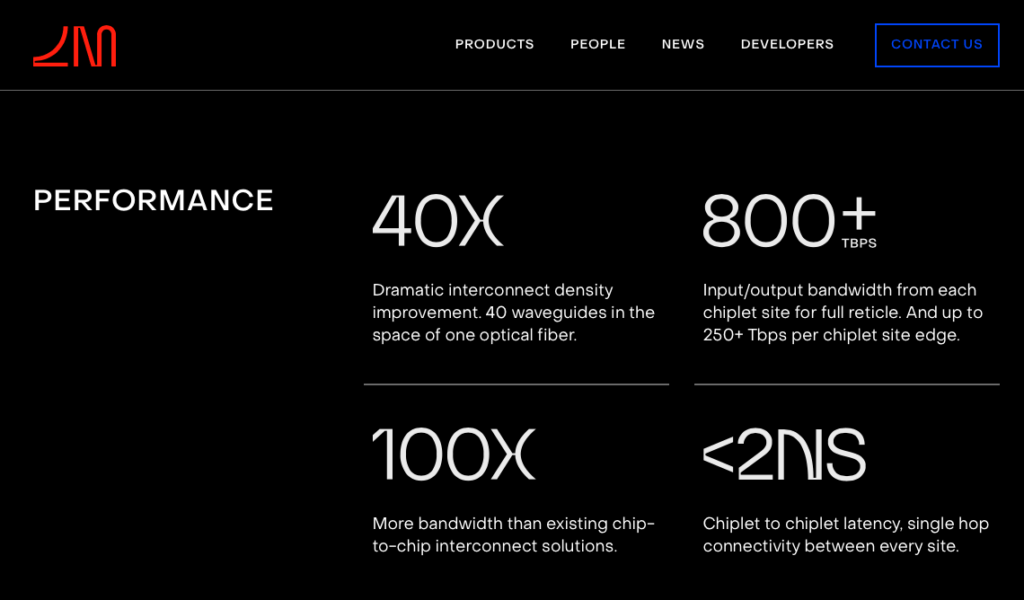
Lightmatter lands $154 million for photonic interconnects / processors

Lightmatter, a start-up based in Boston, raised a $154 million Series C investment round for its photonic interconnects and processors.

Lightmatter’s photonics-enabled products encompass a full stack of hardware and software for AI and supercomputing applications.

“Rapid progress in artificial intelligence is forcing computing infrastructure to improve at an unprecedented rate. The energy costs of this growth are significant, even on a planetary scale,” said Lightmatter co-founder and CEO, Nick Harris. “Generative AI and supercomputing will be transformed by photonic technologies in the coming years, and our investors, partners, and customers are aligned with Lightmatter’s mission of enabling the future of computing infrastructure with photonics.”

The new funding came from SIP Global, Fidelity Management & Research Company, Viking Global Investors, GV (Google Ventures), HPE Pathfinder and existing investors. 

Lightmatter has now raised a total of over $270 million to date. 

  • In 2022, the company announced significant growth with the recruitment of top talent to its leadership team, including Richard Ho, who led Google’s Tensor Processing Unit program, and Ritesh Jain, who led datacenter chip packaging at Intel, as VPs of Hardware Engineering. Lightmatter also announced Jessie Zhang, who led corporate financial planning at Apple, as VP of Finance, and Steve Klinger, former VP at Innovium, as VP of Product. 

https://lightmatter.co/

CoreWeave raises $421 million for GPU cloud service

CoreWeave, a specialized cloud provider built for large-scale GPU-accelerated workloads, announced an additional $200 million in funding to expand its cloud GPU services.

The new funding , which was provided by  Magnetar Capital (“Magnetar”), a leading alternative asset manager, comes just one month after the company announced $221 million in Series B funding, also led by Magnetar, bringing the total for the round to $421 million.

CoreWeave said its  serverless orchestration layer makes it an attractive option for AI startups rushing to get a product to market, as teams can spin up workloads in as little as five seconds with increased portability, less overhead and less management complexity.

“In my 25-year career, I’ve never been a part of a company that’s growing like this,” said CoreWeave CEO and co-founder Michael Intrator. “It’s an incredible moment in time. From a demand standpoint, revenue and client scale, the rise has been exponential, and Magnetar has been an amazing partner from the beginning.”

CoreWeave was founded in 2017 and is based in Roseland, New Jersey.

https://www.coreweave.com

Liquid Dataport connects Mombasa to Muanda via terrestrial fiber

Liquid Dataport launched its newest fibre route connecting Mombasa, Kenya, to Muanda on the west coast of the Democratic Republic of Congo (DR Congo). 

The new 3,800 km fiber route reduces data transmission latency by 20 milliseconds. 

The route connects Kenya and DRC, passing through Uganda and Rwanda and bringing more reliable and affordable broadband connectivity to over 40 million people living and working in all the major cities along the route. The latest route complements Liquid’s earlier achievement, already a first, in 2019, linking Dar Es Salaam to Muanda on the West Coast of  DR Congo via Zambia.

Hardy Pemhiwa, President & Group Chief Executive Officer of Liquid Intelligent Technologies, said, “The real challenge today is closing the access-usage gap in Africa so that more Africans can use the internet technologies available to them, now and in the future. This East-West route which compliments our existing Pan Africa fibre network, is significant because it is helping to solve that problem – it not only brings global traffic to the continent but also improves the cost economics of Africa’s broadband Internet access.”

“We have a significant number of wholesale, enterprise and hyperscale customers along this route, and we fully support them in operating their global networks. The availability of our latest and shortest East to West route brings many proven economic and social benefits – from providing access to online educational resources to creating more jobs and driving the adoption of new technologies,” said David Eurin, Chief Executive Officer of Liquid Dataport.

https://www.liquiddataport.com/liquid-dataport-launches-its-shortest-fibre-route-connecting-the-east-coast-to-the-west-coast-of-africa/

FCC updates National Broadband Map

The FCC released an updated version of its location-based national broadband map.

The FCC finds that more than 8.3 million U.S. homes and businesses lack access to high-speed broadband. 

On net, the improvements to the map since November helped to identify nearly 330,000 more unserved locations.

The FCC mapping team has reviewed challenges to availability data for more than 4 million locations. Over 75% of those challenges have already been resolved and the majority have led to updates in the data on the map showing where broadband is available. At the same time, the new map also reflects a net increase of more than one million new serviceable locations, as compared to the November 2022 pre-production draft.

https://www.fcc.gov/national-broadband-map-it-keeps-getting-better

MACOM opens European Semiconductor Center in France

MACOM is establishing a European Semiconductor Center to offer its customers higher frequency Gallium Arsenide (GaAs) and Gallium Nitride (GaN) monolithic microwave integrated circuits.

MACOM recently acquired the key manufacturing facilities, capabilities and technologies of OMMIC SAS. 

The OMMIC facility, which is located near Paris in Limeil-Brévannes, France, will become the foundation for MACOM’s newly established European Semiconductor Center. 

“We are excited to open MACOM’s European Semiconductor Center,” stated Stephen G. Daly, President and Chief Executive Officer, MACOM. 

https://www.macom.com

5G Open Innovation Lab aims for faster deployment of private mobile

The 5G Open Innovation Lab (5G OI Lab) is collaborating with F5, GXC and Spirent Communications to showcase an enterprise Private Mobile Network (PMN) capable of delivering service in hard-to-reach locations with greater security, control, and resilience.

As 5G infrastructure becomes more mainstream, enterprises and organizations are subsequently deploying more private networks and telco clouds into strategic locations to leverage newly available connectivity, lower latency, and agility. The consistent throughput and capacity on these PMNs bring the promise of 5G to revenue-driven use cases such as IoT and network slicing, while being mindful that security must expand accordingly beyond legacy policies and be thoroughly tested. Especially in edge use cases, one of the requirements most in demand is the need for local breakout to route traffic to as part of a Mobile Edge Compute (MEC) infrastructure or hosted within a data center.

F5, a hybrid and multi-cloud application services and security company, deployed its carrier-grade BIG-IP Virtual Editions. These security functions were consolidated with an N6/SGi-LAN solution adding another layer of speed and security at the network level. 

GXC, a NaaS communications early-stage tech company which is part of the 5G OI Lab ecosystem, contributed their unique distributed mesh configuration for easier and faster deployment of a private network while providing full coverage and capacity of a cellular network.

This collaboration was validated using Spirent’s Landslide test and emulation platform, which provided device and RAN emulation to create a diversity of traffic flows across multiple data networks through the 5G core which is monitored and managed by F5 behind the UPF. 

Finally, the entire solution was pressure-tested through technology made available through the 5G OI Lab and its enterprise and operator partners deployed with GXC’s ONYX Portal.

The 5G Open Innovation Lab notes that in the four years since its founding, its membership roster has grown to include Accenture, Amdocs, Avanade, Dell Technologies, Deloitte, Ericsson, F5, GAF (Standard Industries), Intel, Microsoft, Nokia, Palo Alto Networks, SK Telecom, Spirent, T-Mobile and VMware as well as 101 multi-stage enterprise startups who have collectively raised $1.641B of venture capital. 

https://5goilab.com/latest/


Tuesday, May 30, 2023

Amazon Security Lake consolidates data from cloud, on-prem and SaaS

Amazon Web Services launched a service that automatically centralizes an organization’s security data from across their AWS environments, leading SaaS providers, on-premises environments, and cloud sources into a purpose-built data lake.

Amazon Security Lake converts and conforms incoming security data to the Open Cybersecurity Schema Framework (OCSF) open standard, making it easier for security teams to automatically collect, combine, and analyze security data from more than 80 sources, including AWS, security partners, and analytics providers. 

The service builds the security data lake using Amazon Simple Storage Service (Amazon S3) and AWS Lake Formation to automatically set up security data lake infrastructure in a customer’s AWS account, providing full control and ownership over security data. 

The data lake collects security data from sources like Amazon VPC Flow Logs and AWS CloudTrail, third-party sources like Splunk, CrowdStrike, Datadog, and Cribl, and their own sources of data. 


Keysight and Nokia test 6G active sub-THz components

Keysight Technologies and Nokia Bell Labs will demonstrate component and radio frequency integrated circuit (RFIC) characterization for 6G subterahertz (sub-THz) radio frequency (RF) applications in the D- and E-bands at the International Microwave Symposium 2023 (IMS 2023) in June.

The companies have been collaborating to develop characterization techniques to test active sub-THz components, such as amplifiers, mixers, and frequency converters, to ensure they do not introduce additional signal distortion into communications systems.

The demonstration characterizes a Nokia power amplifier (PA) developed for use in 6G D-band wireless communications systems and designed to operate with a low error vector magnitude (EVM). Using the Keysight N5290A PNA Millimeter Wave System, Nokia Bell Labs can accurately detect the PA’s low EVM, which is a measure of the signal distortion introduced into the communications system by the component. With these measurements, Nokia Bell Labs can better understand the PA’s performance to optimize its 6G transmission system design.

Keysight and Nokia Bell Labs are also partnering to showcase an E-band test solution at IMS 2023. The demonstration features the Keysight N9042B UXA Signal Analyzer used in combination with the V3050A Signal Analyzer Frequency Extender to measure a Nokia transceiver RFIC designed for use in an E-band system for backhaul applications.

Shahriar Shahramian, Head of RFIC & Packaging Lab, Nokia Bell Labs, said: “At Nokia Bell Labs we continue to push the carrier frequency and complexity of our RFIC, packaging, and module integration. With these advancements we move the frontier of what is possible from 6G wireless and optical communication systems. Consequently, the test and measurement industry plays a vital role to enable the complex characterization demanded from our devices and to reduce our time to market.”

NVIDIA’s data center revenue rises 14% yoy to $4.28B

NVIDIA reported quarterly revenue of $7.19B, down 13% compared to a year ago but well above its outlook. More significantly, NVIDIA again affirmed that Cloud Service Providers (CSPs) and enterprises are racing to deploy its flagship NVIDIA Hopper- and Ampere-architecture GPUs to meet surge in interest in generative AI.

GAAP earnings per diluted share for the quarter were $0.82, up 28% from a year ago and up 44% from the previous quarter. Non-GAAP earnings per diluted share were $1.09, down 20% from a year ago and up 24% from the previous quarter.

“The computer industry is going through two simultaneous transitions — accelerated computing and generative AI,” said Jensen Huang, founder and CEO of NVIDIA. “A trillion dollars of installed global data center infrastructure will transition from general purpose to accelerated computing as companies race to apply generative AI into every product, service and business process. Our entire data center family of products — H100, Grace CPU, Grace Hopper Superchip, NVLink, Quantum 400 InfiniBand and BlueField-3 DPU — is in production. We are significantly increasing our supply to meet surging demand for them.” 

Some highlights

  • Data center first-quarter revenue was a record $4.28 billion, up 14% from a year ago and up 18% from the previous quarter.
  • Google Cloud is the first cloud provider offering the new NVIDIA L4 Tensor Core GPU to accelerate generative AI applications.
  • Gaming first-quarter revenue was $2.24 billion, down 38% from a year ago and up 22% from the previous quarter.
  • Professional Visualization first-quarter revenue was $295 million, down 53% from a year ago and up 31% from the previous quarter.
  • Automotive first-quarter revenue was a record $296 million, up 114% from a year ago and up 1% from the previous quarter.

HPE sees growth in GreenLake edge-to-cloud

Hewlett Packard Enterprise reported Q2 revenue of $7.0 billion, up 4% from the prior-year period and 9% in constant currency. GAAP margin amounted to 36.0%, an all-time record for the company.

“Building on a great start to the fiscal year, HPE grew revenue, increased the contribution of recurring revenue through the HPE GreenLake edge-to-cloud platform, and delivered exceptional profitability to generate a strong second quarter performance,” said Antonio Neri, president and CEO of Hewlett Packard Enterprise. “Our shift to a higher-margin portfolio mix led by the Intelligent Edge segment, and the strong demand for our AI offering, further strengthen the investment opportunity for our shareholders.”

Some highlights:

* Intelligent Edge revenue was $1.3 billion, up 50% from the prior-year period in actual dollars and 56% in constant currency, with 26.9% operating profit margin, compared to 12.6% in the prior-year period. 

* High Performance Computing & Artificial Intelligence revenue was $840 million, up 18% from the prior-year period in actual dollars and 22% in constant currency. 

* Compute revenue was $2.8 billion, down 8% from the prior-year period in actual dollars and 3% in constant currency.

* Storage revenue was $1.0 billion, down 3% from the prior-year period in actual dollars and up 2% in constant currency. HPE Alletra revenue grew triple digits from the prior-year period. 

* Financial Services revenue was $858 million, up 4% from the prior-year period in actual dollars and up 7% in constant currency. 

https://investors.hpe.com/news-and-events#investor-events


IP Infusion cites surging demand for white box open networking

IP Infusion reported record-breaking growth in 1Q 2023 with sales at the highest ever level for a single quarter. 

The company, which is a wholly owned and independently operated subsidiary of ACCESS CO, said first quarter OcNOS sales orders are more than three times Year over Year compared to Q1 2022, led by robust demand for OcNOS’s disaggregated Data Center, Aggregation Router and Cell Site Router products.

In addition, 23 new customers in the first quarter chose OcNOS, the industry’s first and preferred full-featured modular extensible network OS designed for white box open networking solutions. 

“IP Infusion is proud to report yet another unequaled quarter of sales growth fueled by a powerful demand for our industry-acclaimed OcNOS products,” said Atsushi Ogata, President and CEO of IP Infusion. “This solid performance reflects our commitment to exceed expectations for delivering the most advanced disaggregated solutions to our expanding customer base and partners across the globe.”

Vector Capital to acquire Riverbed

Vector Capital, a leading private equity firm, agreed to acquire Riverbed Technology. Financial terms were not disclosed.

Riverbed, which was founded in 2002 and is based in San Francisco, specializes in network acceleration and telemetry.

Riverbed’s existing lenders will continue to support the Company by providing it with a new credit facility at closing. 

Stephen Goodman, a Principal at Vector Capital, added: “With a significantly enhanced balance sheet and greater financial flexibility, Riverbed will have the ability to accelerate innovative offerings like Aternity and Alluvio IQ, creating value for its blue-chip customer base.”

https://www.riverbed.com

Semtech appoints new CEO

Semtech appointed Paul H. Pickle as its new president and chief executive officer, replacing Mohan Maheswaran, who announced his retirement in March.

Previously, Mr. Pickle has served as president and chief executive officer and member of the board of directors of Lantronix. Before that, he served as president and chief operating officer of Microsemi Corporation, a provider of semiconductor and system solutions, from November 2013 until Microsemi was acquired by Microchip Technology Inc. in May 2018 for $10.3 billion. 

Monday, May 29, 2023

NVIDIA positions Spectrum-X Networking for generative AI

NVIDIA introduced its Spectrum-X Networking Platform for Ethernet-based AI clouds.

The Spectrum-X solution consists of the company's existing 51 Tbps NVIDIA Spectrum-4 Ethernet switch and the NVIDIA BlueField-3 DPU, along with acceleration software and software development kits (SDKs).

Advanced RoCE extensions work across the Spectrum-4 switches, BlueField-3 DPUs and NVIDIA LinkX optics to create an end-to-end 400GbE network that is optimized for AI clouds. The Spectrum-4 Ethernet switch supports smart-leaf, spine, and super-spine designs. It offers 64 ports of 800GbE in a dense 2U form factor, and up to 256 200Gbs ports can be connected by a single switch, or 16,000 ports in a two-tier leaf-spine topology.

The software stack includes  Cumulus Linux, pure SONiC and NetQ — which together enable the networking platform’s extreme performance. The BlueField DPUs are powered by NVIDIA DOCA™ software framework.

The Spectrum-X solution set also includes a  selection of direct attach copper cables (DACs), active copper cables (ACCs), active optical cables (AOCs), and optics needed to connect OSFP and QSFP-based fabrics.

“Transformative technologies such as generative AI are forcing every enterprise to push the boundaries of data center performance in pursuit of competitive advantage,” said Gilad Shainer, senior vice president of networking at NVIDIA. “NVIDIA Spectrum-X is a new class of Ethernet networking that removes barriers for next-generation AI workloads that have the potential to transform entire industries.”

https://nvidianews.nvidia.com/news/nvidia-launches-accelerated-ethernet-platform-for-hyperscale-generative-ai